


If you’re like most online shoppers, you hate browsing dozens of pages to find the product you’re looking for.
And if you’re an online business owner, you know that losing potential customers because they can’t find products is a huge problem.
That’s where virtual shopping assistants come in.
Ecommerce chatbots are the most popular online shopping assistance tools. They make online shopping experiences much more enjoyable—and help increase sales at the same time!
What are virtual shopping assistants?
Virtual shopping assistants are online tools that help shoppers find the products they’re looking for. They work by answering questions and helping customers navigate your online store. Some virtual shopping assistants can even place orders for you!
Virtual shopping assistants come in many shapes and kinds. They include:
- Chatbots
- Widgets
- Popups
- Mobile apps
- Conversational AI
- Browser plugins
Some are very simple and can only provide basic information about a product. Others are more advanced and can handle tasks such as adding items to a shopping cart or checking out. No matter their level of sophistication, all virtual shopping helpers have one thing in common—they make online shopping easier for customers.
The majority of shopping assistants are text-based, but some of them use voice technology too. In fact, about 45 million digital shoppers from the United States used a voice assistant while browsing online stores in 2021.
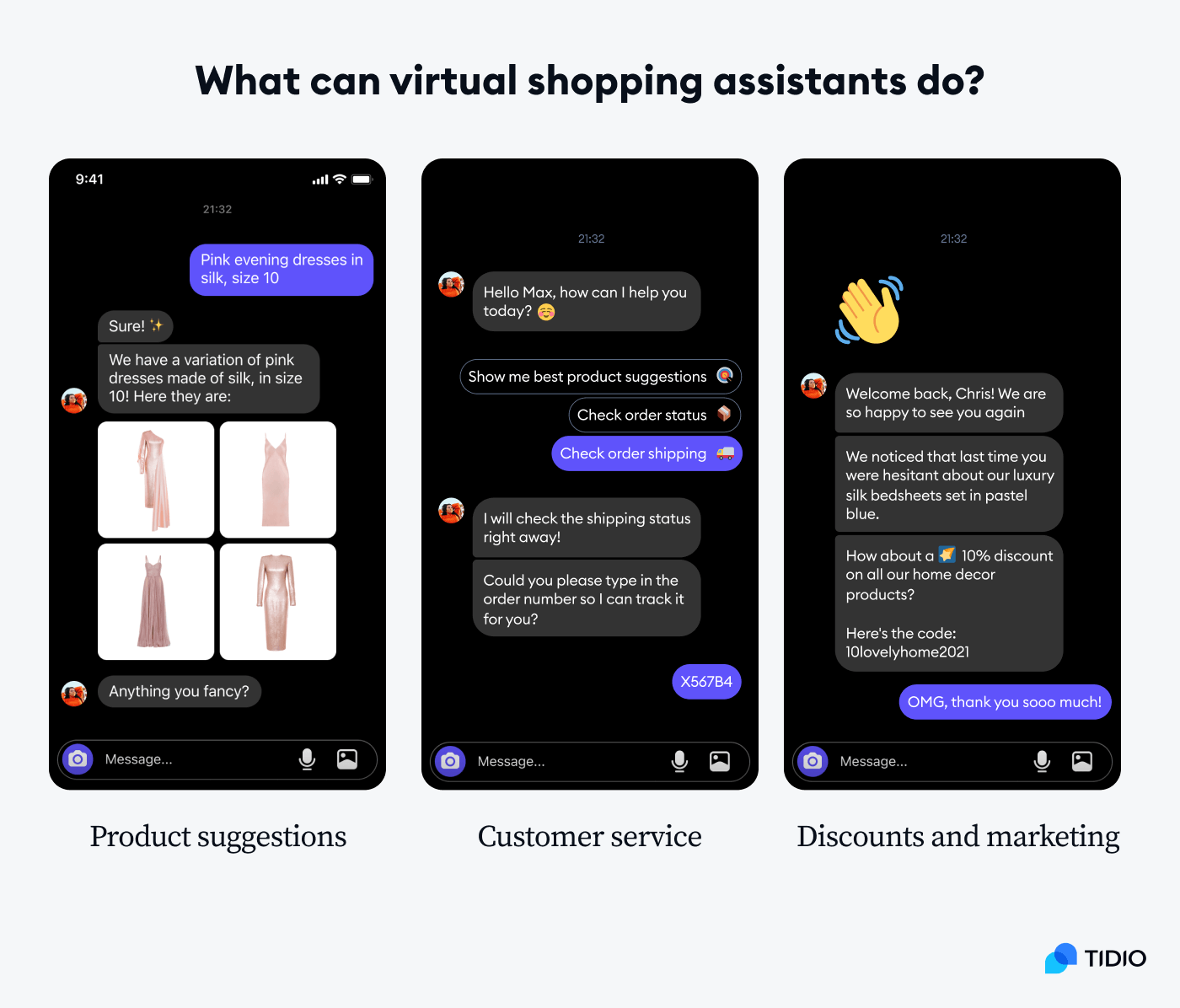
A study carried out by Heyday found out that 20% of all virtual assistant user intents were connected with product discovery. Other typical use cases include:
- Providing discount codes and special offers
- Recovering abandoned shopping carts
- Offering personalized product recommendations
- Answering customer questions
- Processing and tracking orders and returns
- Giving personalized gift suggestions
Virtual shopping assistants are becoming more popular as online businesses are looking for new ways to improve the customer experience and boost sales. In 2022, about 88% of customers had at least one conversation with an ecommerce chatbot. With chatbot popularity on the rise, more businesses want to use online shopping assistants to help their customers.
Why should I use a virtual shopping assistant?
According to recent online shopping statistics, there are over 9 million ecommerce stores. Right now, the online retail industry is highly competitive and businesses are doing their best to win new customers. Increasing customer engagement with AI shopping assistants and messaging chatbots is one of the most effective ways to get a competitive edge.
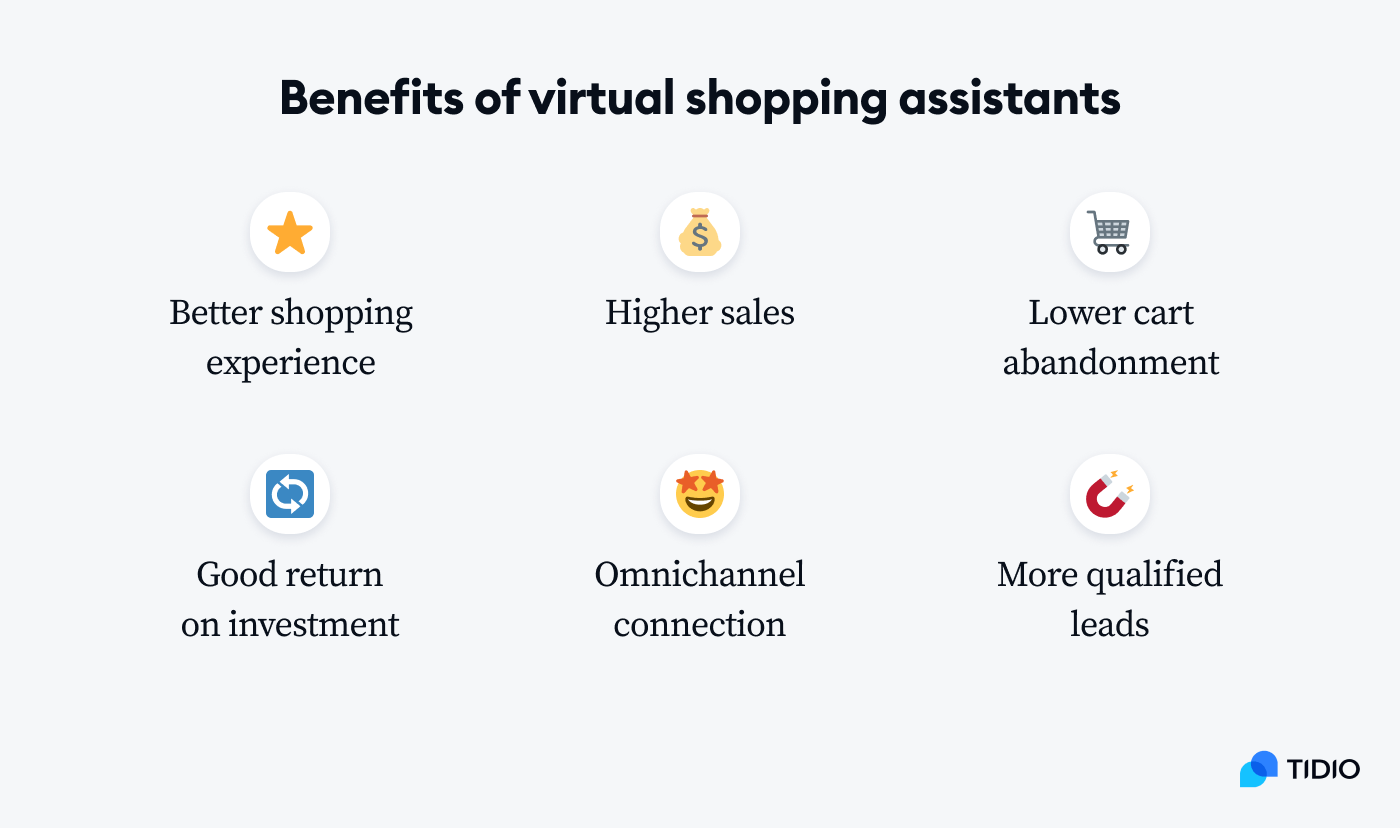
There are many reasons for using conversational chatbots:
1. Better customer browsing experience and store navigation
Browsing a static site without interactive content can be tedious and boring. Customers who use virtual assistants can find the products they are interested in faster. It’s also much more fun, and getting a helping hand in real-time can influence their purchasing decisions.
2. Reducing the number of customers who abandon their shopping carts
Online shopping assistants powered by AI can help reduce the average cart abandonment rate. They achieve it by providing a quick and easy way for shoppers to ask questions about products and checkout. They can also help keep customers engaged with your brand by providing personalized discounts.
3. Increasing sales by sending product recommendations and cross-selling
Ecommerce chatbots are a great way to increase your conversion rate by automating your cross-selling and upselling strategy. They can recommend products to customers based on their previous purchases and browsing behavior. For example, when a customer buys a new pair of shoes, an AI virtual shopping assistant can suggest matching trousers.
4. Saving on expenses related to customer support and marketing
You can set up a virtual assistant to answer FAQs or track orders without answering each request manually. This can reduce the need for customer support staff, and help customers find the information they need without having to contact your business. Additionally, chatbot marketing has a very good ROI and can lower your customer acquisition cost.
5. Reaching customers through their favorite communication channels
Nowadays, it’s in every company’s best interest to stay in touch with their customers—not the other way round. It is a good idea to cover all possible fronts and deliver uniform, omnichannel experiences. Clients can connect with businesses through virtual phone numbers, email, social media, chatbots. By providing multiple communication channels and all types of customer service, businesses can improve customer satisfaction.
6. More efficient lead capture and qualification
It’s difficult to sell products to first-time visitors. That’s why optimizing sales through lead generation and lead nurturing techniques is important for ecommerce businesses. Conversational shopping assistants can turn website visitors into qualified leads. They can also tag customers who visit specific product pages.
It’s no secret that virtual shopping chatbots have big potential when it comes to increasing sales and conversions. But what may be surprising is just how many popular brands are already using them. If you want to join them, here are some tips on embedding AI tool for ecommerce on your online store pages.
How to add a virtual shopping assistant to your website
Adding an online shopping chatbot to your website is easy. All you need is a chatbot provider and auto-generated integration code or a plugin.
1. Create an account on a platform that offers a virtual assistant feature

With some chatbot providers, you can create a free account with your email address. Tidio is one of them—when you sign up there is a tour with additional instructions.
2. Customize the look of your messaging widget
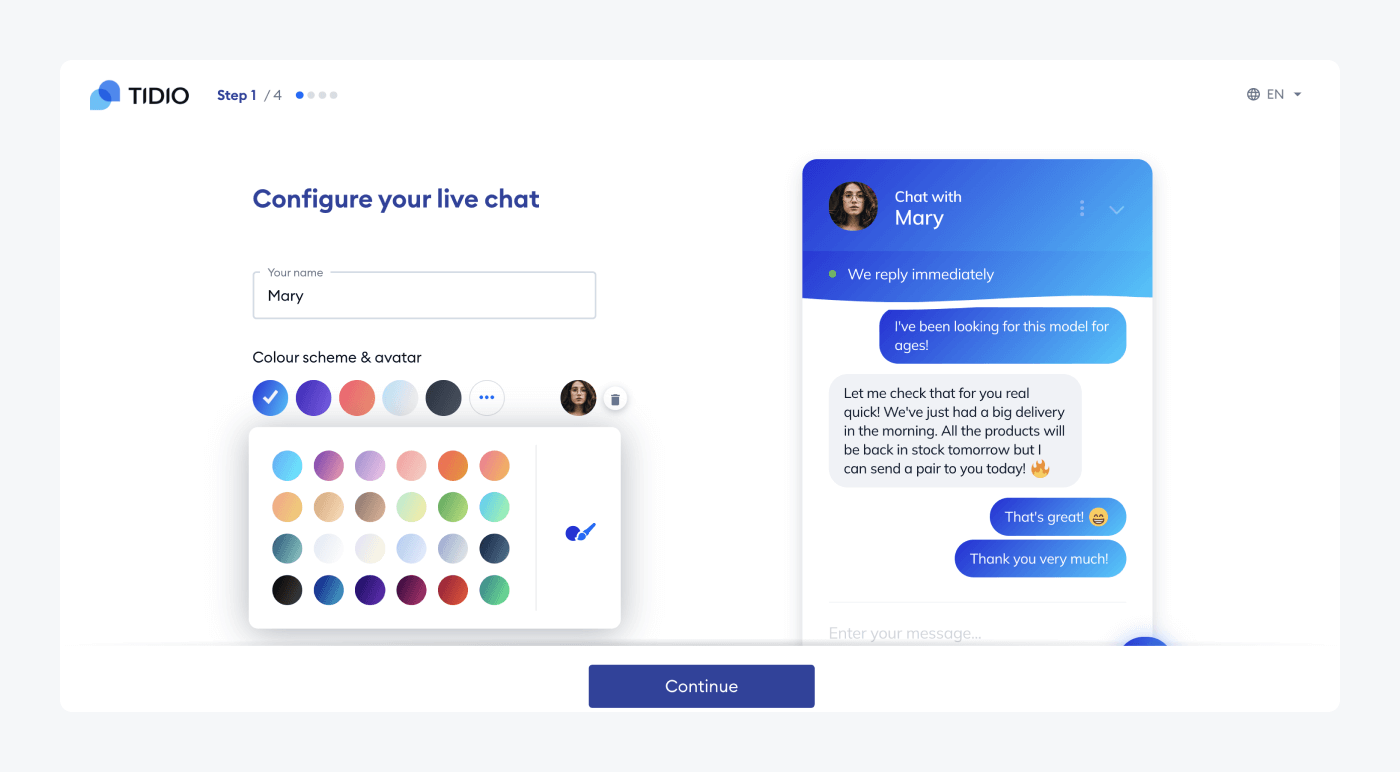
You can set the color of the widget, the name of your virtual assistant, avatar, and the language of your messages.
3. Generate a code-snippet or install a plugin

After setting up the initial widget configuration, you can integrate assistants with your website in two different ways. You can either generate JavaScript code or install an official plugin.
The code needs to be integrated manually within the main